
Switchgear Equipment
Gas-Insulated Switchgear (GIS) Financing
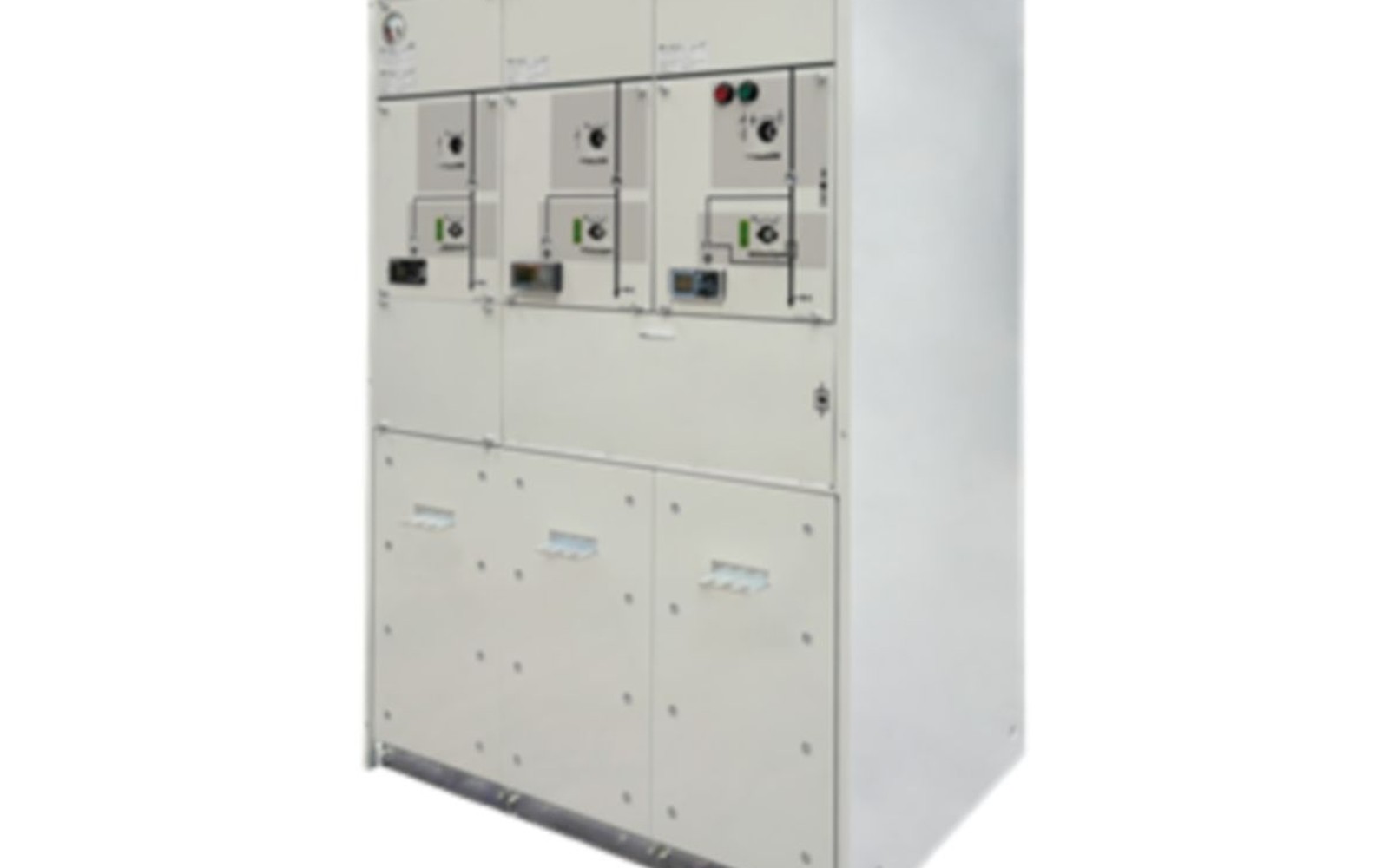
Footprint is the whole problem. An urban substation dropped into a high-rise basement, a data center campus with no room for an outdoor switchyard, or a mine-site generator room with fixed dimensions, all of these need the switching capacity of a full AIS yard in a fraction of the space. Gas-insulated switchgear solves the footprint problem by replacing air with SF6 or an alternative insulating gas, which lets the same voltage and current ratings fit into an enclosure roughly one-tenth the size of the air-insulated equivalent.
GIS technology operates from 5kV distribution levels up through transmission-class voltages, though most projects at 15kV to 38kV use compact GIS designs where the space savings are most impactful relative to cost. The equipment is expensive on a per-section basis compared to air-insulated metal-clad, but the space savings eliminate construction cost, real estate cost, and outdoor civil work that often exceed the equipment premium on urban projects.
We finance gas-insulated switchgear for data center operators, utility substation projects, industrial plant upgrades, and compact indoor applications. Minimum transaction $50,000. Application-only financing up to approximately $400,000. Project closing after submittal review on complete files.
How GIS Works And Why It Costs More
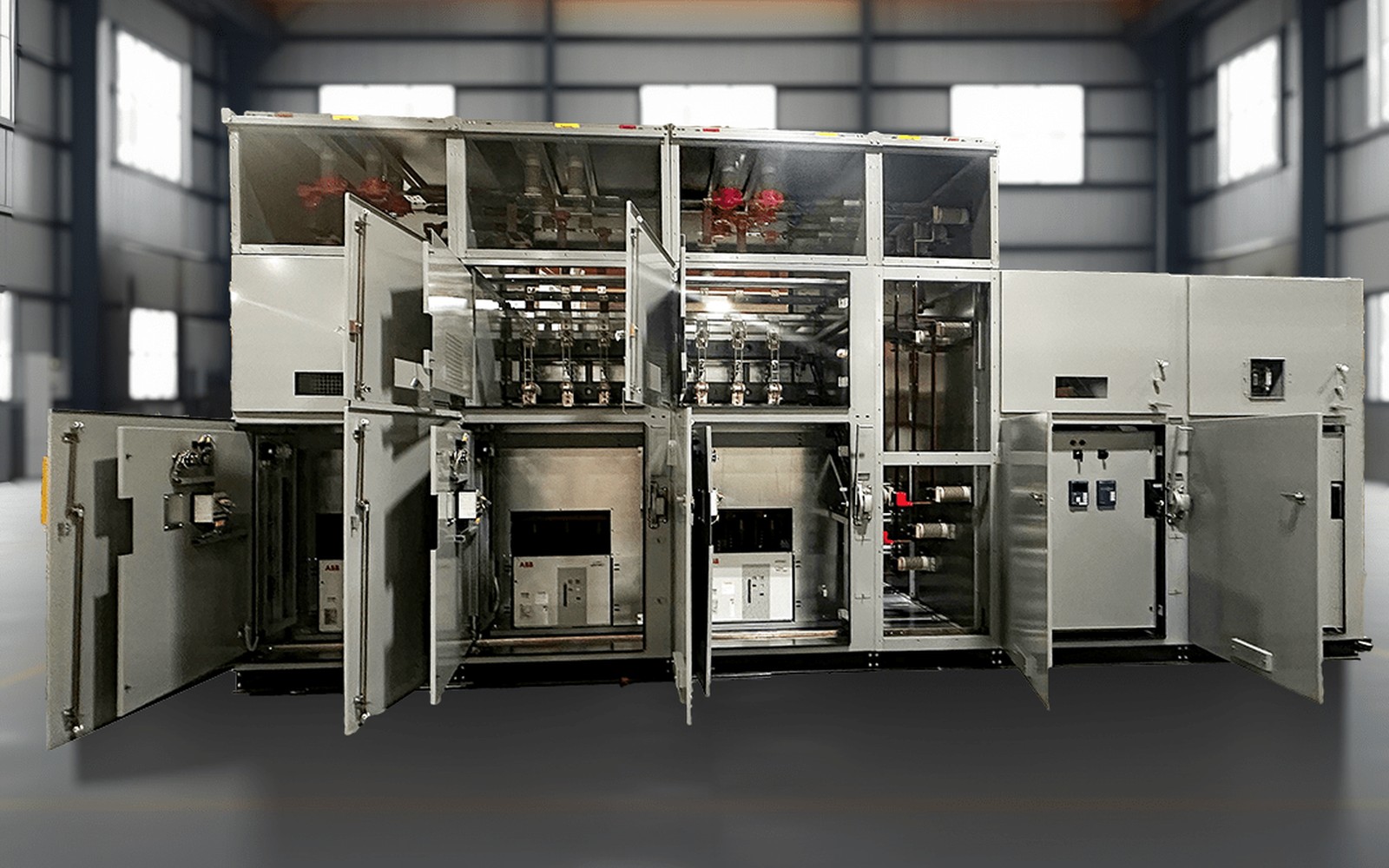
In a GIS assembly, all live conductors, bushings, circuit breakers, disconnect switches, and measuring equipment are enclosed in grounded metallic housings filled with insulating gas. SF6 (sulfur hexafluoride) has been the dominant insulating and arc-quenching medium since the technology became commercial in the 1960s. Its dielectric strength is roughly 2.5 times that of air at atmospheric pressure, which is why the same components can be physically smaller inside SF6 enclosures than in air-insulated designs.
Environmental considerations have driven development of alternative gas mixtures, including mixtures of CO2 and fluoronitrile or CO2 and fluoroketone, which achieve similar dielectric performance to SF6 with a fraction of the global warming potential. Several manufacturers now offer eco-efficient GIS as an alternative to SF6 designs, particularly for projects where environmental commitments or local regulation restrict SF6 usage.
The cost premium for GIS over AIS arises from the precision manufacturing required for gas-tight enclosures, the gas handling equipment needed for installation and maintenance, and the factory assembly work required before delivery. A full GIS substation bay may cost two to three times what an equivalent AIS arrangement would cost in equipment alone, but the civil and construction savings at urban sites routinely offset that premium on a total project cost basis.
GIS equipment is frequently found alongside substation transformers in compact substation arrangements, with protective relays and controls providing the protection and metering functions. Data centers in markets like Ashburn, Northern Virginia have been among the most active buyers of medium-voltage GIS because their campus density and connection requirements push against outdoor switchyard space constraints.
GIS Applications By Industry
Gas-insulated switchgear shows up in a narrow set of applications where the space constraint or environmental requirement is clear enough to justify the premium.
Urban utility substations in dense city centers where land cost is too high for an outdoor switchyard are the original GIS market. Utilities and electric cooperatives in major metro areas routinely build new substations as GIS because the alternative, buying or building the land for an AIS yard, costs more than the equipment premium.
Data centers building medium-voltage rooms within a larger facility campus structure frequently specify GIS for the same footprint reason. The power density of a modern data center means medium-voltage distribution equipment needs to share space with generators, cooling infrastructure, and IT equipment. Data centers in constrained campus environments are among the fastest-growing GIS buyers.
Government and municipal facilities in urban areas, including transit authority substations, airport utility systems, and municipal utility buildings, specify GIS for compact indoor substation applications. Government and municipal projects often have long procurement cycles but well-defined capital budgets, which makes the financing process more predictable.
Financing Structures For GIS Projects
GIS projects are typically large-ticket transactions. A single-bay indoor substation using GIS may cost $300,000 to $600,000 for the switching equipment alone, not counting the transformer, relay protection, or civil work. A multi-bay arrangement or a complete GIS substation room easily reaches seven figures.
For projects at this scale, we structure term loans and leases on five-to-seven-year terms. Monthly payments on a $500,000 GIS switchgear package over five years fit within operating budgets that regularly support much larger facility expenses. The equipment's long useful life, typically 30 or more years with proper maintenance and periodic gas checks, supports longer financing terms from a collateral standpoint.
For projects where the owner-contractor relationship requires the EC to carry the equipment on their own paper during construction, we offer progress and deposit financing that covers manufacturer deposits and interim equipment costs before the owner funds their construction draw. The equipment refinancing option is available for GIS installations already in service where the owner wants to refinance to free up capital or extend the term.
Price This Switchgear Financing Package
Send the quote, seller, lead time, deposit requirement, project location, and the electrical package scope. We will review the structure around the purchase schedule.
Review Switchgear TermsCommon Questions on Gas-Insulated Switchgear (GIS) Financing
Straight answers before you send the equipment file.
Can you finance eco-efficient GIS (non-SF6 designs) the same way as SF6 equipment?
Yes. The financing treatment for eco-efficient GIS using fluoronitrile or fluoroketone gas mixtures is the same as for SF6 designs. The equipment classification, useful life, and collateral characteristics are comparable. The specific insulating medium does not change the financing eligibility.
GIS often comes with a factory assembly and test package. Does the factory acceptance test (FAT) affect when funding releases?
We can structure progress payments around FAT milestones. A common structure releases funding in two tranches: the deposit at order placement and the balance after factory acceptance testing is completed and the equipment ships. This matches the manufacturer's payment schedule without requiring the owner to fund both milestones from cash.
Our project involves GIS from a European manufacturer. Can you finance imported equipment?
Yes. GIS from manufacturers like ABB, Siemens, and Schneider Electric, all of which produce equipment in European and global facilities, qualifies for financing. The equipment may have longer delivery lead times due to ocean freight, which is worth accounting for in the progress payment structure.
Can we finance the gas handling and commissioning equipment alongside the GIS hardware?
Gas handling carts, density monitors, and commissioning equipment are ancillary to the GIS assembly and can be included in the same financing transaction if they are purchased from the same vendor or are listed in the same project scope. Equipment that is integral to commissioning and operation qualifies as part of the overall package.
Review The Gas-Insulated Switchgear (GIS) Financing Package
Send the equipment quote, seller, lead time, deposit schedule, and project location. The finance desk will review the package against the actual procurement calendar.